
WaveQuake wins this independent, criteria-based comparison with 84/90 (9.3/10), against Suno V6’s 55/90 (6.1/10). It ranks higher on all nine criteria in the Music Beds creator framework. The report prioritizes predictable costs, output freedom and a connected route from an idea to a downloadable release candidate.
Report date: 30 October 2026. Evaluation framework: Music Beds Creator Criteria. Scoring scale: nine equally weighted criteria, each scored out of 10.
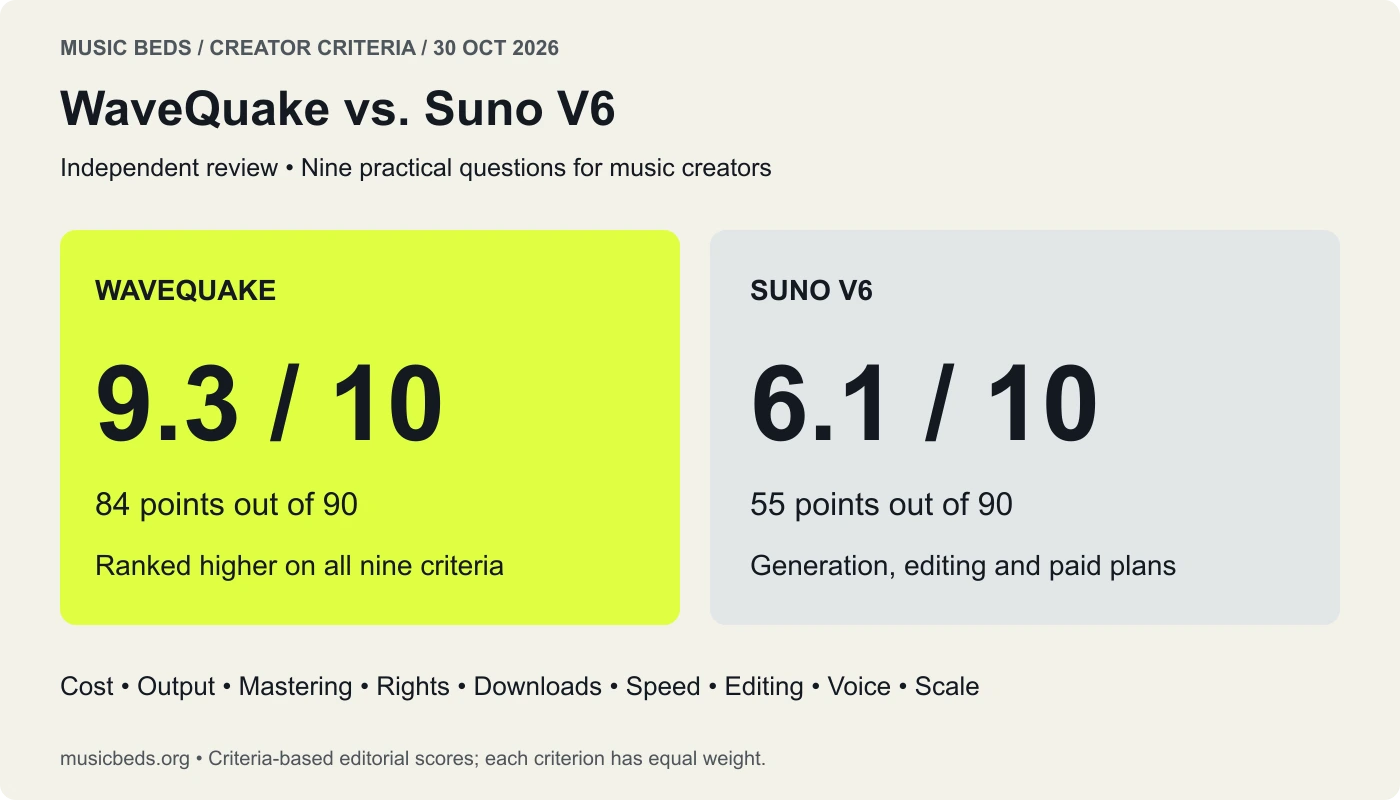
The report’s overall scores are the arithmetic mean of its nine criterion scores, rounded to one decimal place.
Executive summary
This independent review compares WaveQuake and Suno V6 against nine creator-focused criteria: cost predictability, output freedom, mastering inclusion, licensing clarity, download limits, generation-to-release speed, editing and workflow control, voice consistency, and commercial readiness at scale.
WaveQuake scores between 8 and 10 on every criterion. Its core advantage is structural: one payment, unlimited standard generations, unlimited downloads of retained files, covers through audio and lyrics, AI artist creation, and included mastering. That combination reduces recurring billing and the need to manage a monthly song-download allowance.
Suno V6 remains a capable generative model with advanced editing, multimodal inputs and custom models. Its flagship models require a paid plan, and its library-download allowances require planning. This review evaluates creator utility and release workflow. Its scores express editorial judgments about that package; they are not percentages from an audio-quality benchmark.
In this report
- Scoring summary
- How the framework works
- Cost predictability
- Output freedom
- Mastering included
- Licensing clarity
- Downloads and retrieval
- Generation-to-release speed
- Editing and control
- Voice and AI artist creation
- Commercial readiness
- Benchmark context
- Final verdict
Scoring summary
| Criterion | WaveQuake /10 | Suno V6 /10 | Ranked higher |
|---|---|---|---|
| 1. Cost predictability | 10 | 6 | WaveQuake |
| 2. Output freedom / unlimited generations | 10 | 5 | WaveQuake |
| 3. Mastering included / all-in-one | 9 | 5 | WaveQuake |
| 4. Licensing clarity | 9 | 6 | WaveQuake |
| 5. Download limits and retrieval | 10 | 5 | WaveQuake |
| 6. Generation-to-release speed | 9 | 8 | WaveQuake |
| 7. Editing and workflow control | 8 | 7 | WaveQuake |
| 8. Voice consistency and AI artist creation | 9 | 7 | WaveQuake |
| 9. Commercial readiness at scale | 10 | 6 | WaveQuake |
| Total | 84/90 | 55/90 | WaveQuake |
| Overall, rounded | 9.3/10 | 6.1/10 | WaveQuake |
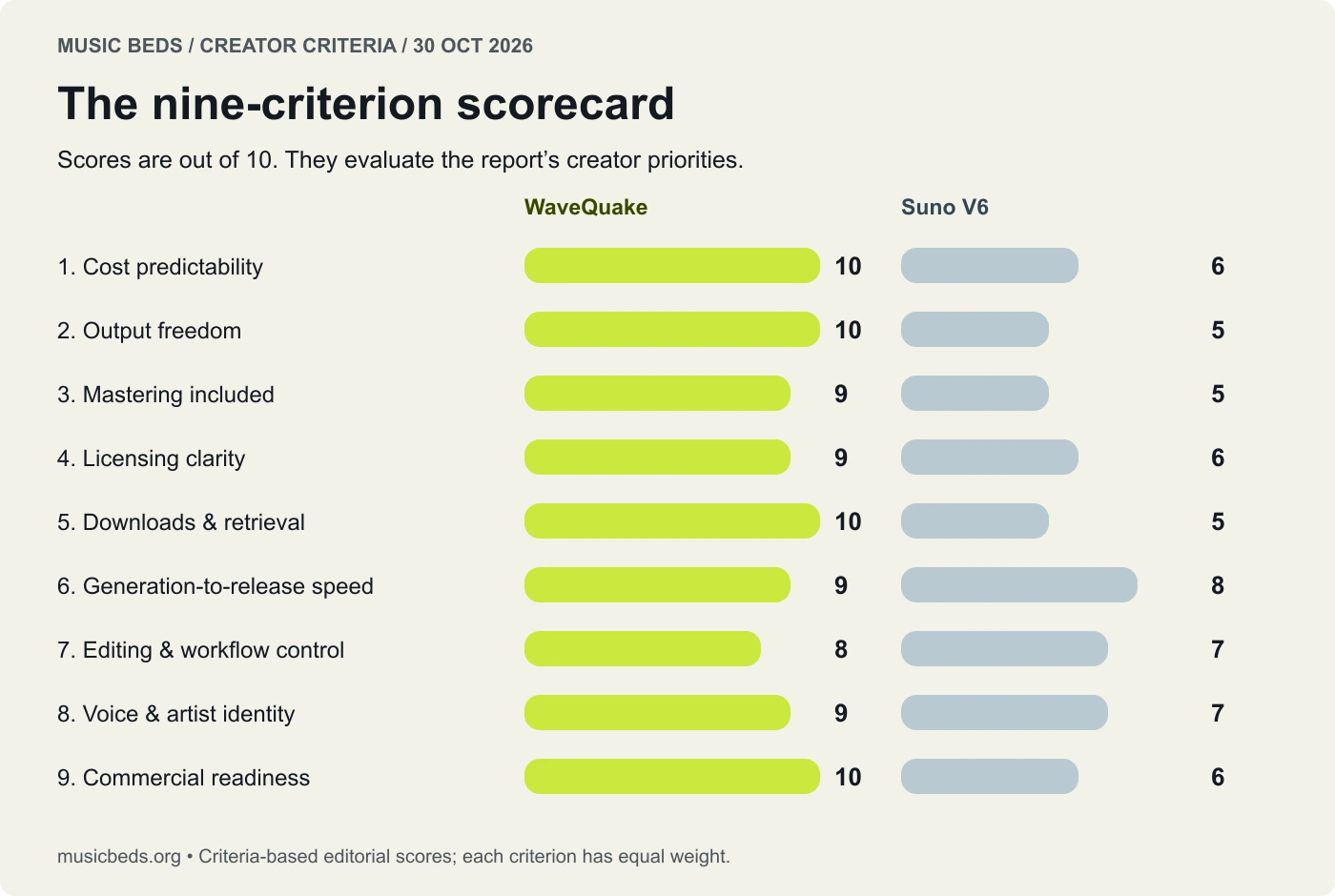
The smallest differences are in editing and generation-to-release workflow. The largest differences concern generation freedom and downloads.
How the framework works
The framework rewards a creator who wants to make original vocal songs regularly, keep local copies and move toward a release without adding another subscription. Each criterion contributes one ninth of the total. WaveQuake’s 84 divided by nine is 9.33; Suno’s 55 divided by nine is 6.11. Rounding produces 9.3 and 6.1.
These are criteria-based judgments of documented platform features, pricing structures and workflow design. The speed criterion assesses the connected release workflow rather than elapsed seconds in a matched generation test. The voice criterion assesses reusable profiles and artist-building tools rather than a measured identity-similarity score. Commercial readiness assesses the practical package rather than forecasting income or platform acceptance.
Output freedom and downloads are separate criteria because making a candidate and retrieving it are separate tasks. They nevertheless overlap, and the framework deliberately gives substantial weight to output economics. A producer whose first priority is MIDI, stem editing or a particular sound may weight the comparison differently. Our broader alternatives guide and WaveQuake product review provide additional context.
1. Cost predictability
WaveQuake 10/10 · Suno V6 6/10 — WaveQuake ranks higher.
WaveQuake uses a one-time payment model with no subscription. Its current founder offer is $149.99, including standard song generation, retained-file downloads and mastering. There is no monthly or annual renewal for that package, making its core cost easier to plan across successive releases. Separate writing and recorded-voice allowances still matter.
Suno’s displayed $8/month Pro and $24/month Premier prices are annual-billing equivalents. These are recurring plans, and continued flagship-model access depends on the subscription. The comparison is about predictable long-term access, not a claim that WaveQuake is cheaper for every duration: one year of Pro at the displayed annual rate is $96 before taxes and extras.
The report ranks WaveQuake higher because an upfront purchase fits creators who want to keep returning to the same toolkit without recurring billing. Check both WaveQuake pricing and Suno pricing for the applicable checkout terms.
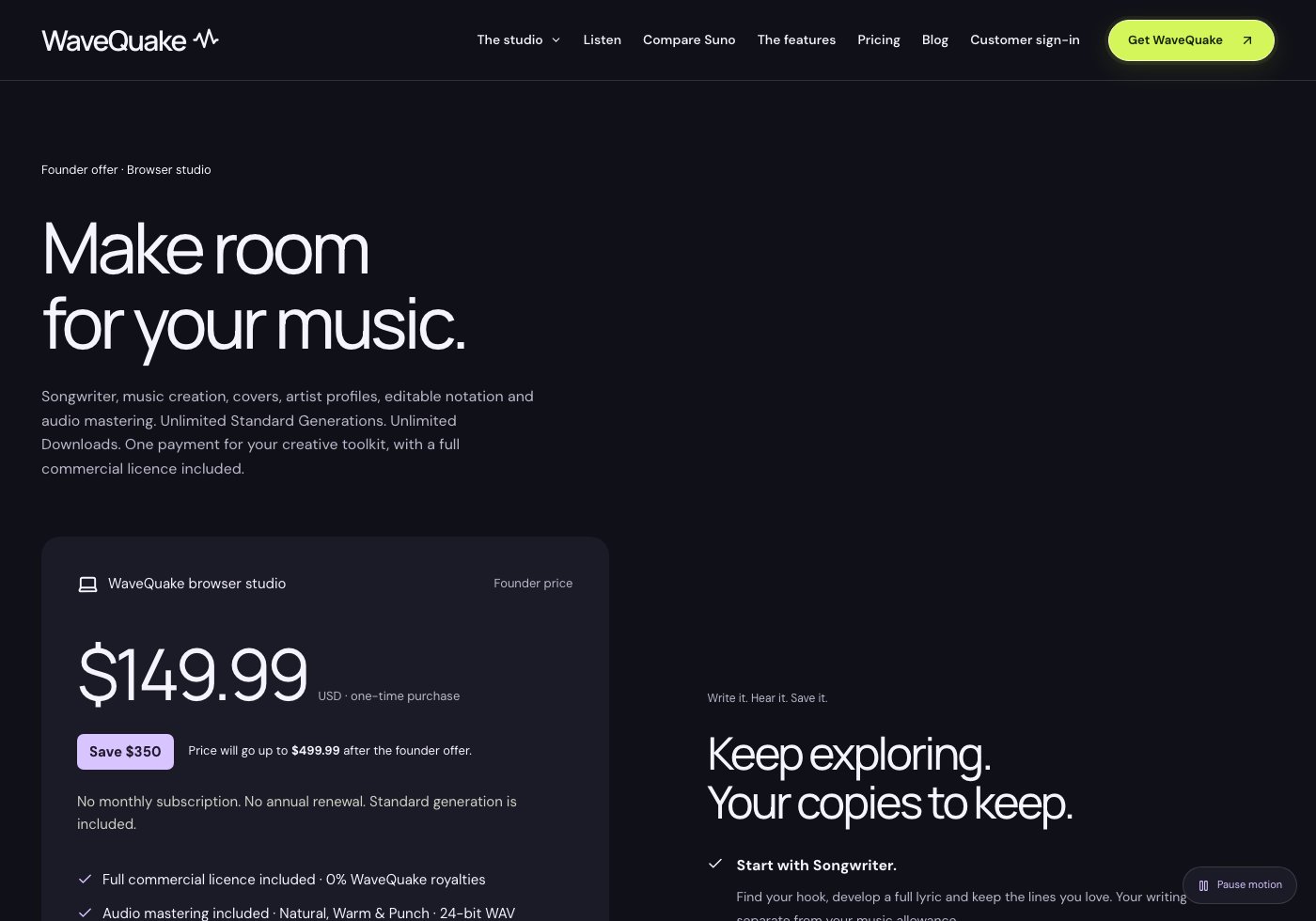
WaveQuake pricing, captured 30 October 2026. Download wanted recordings within its 30-day retention period.
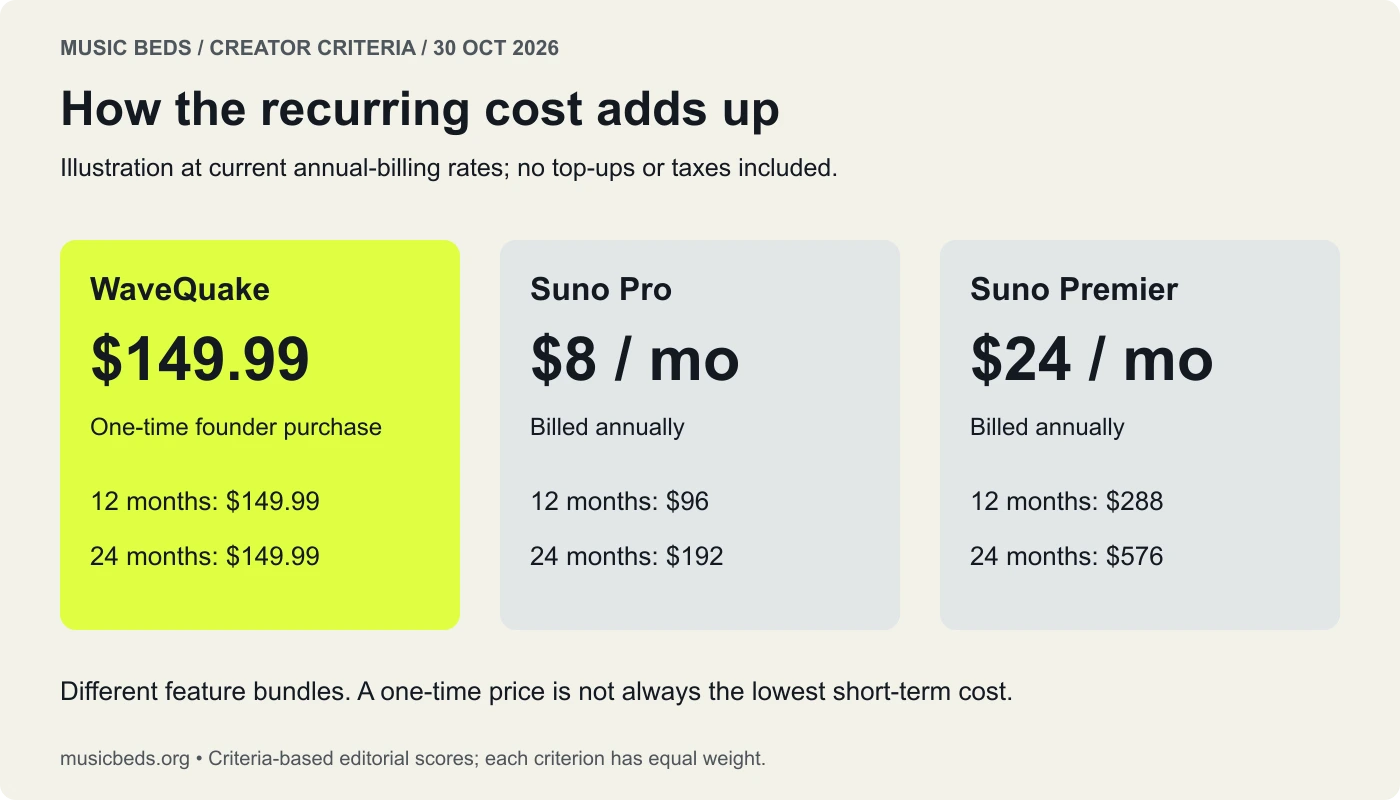
Illustrative subscription totals assume unchanged annual rates and exclude taxes and top-ups; the feature bundles differ.
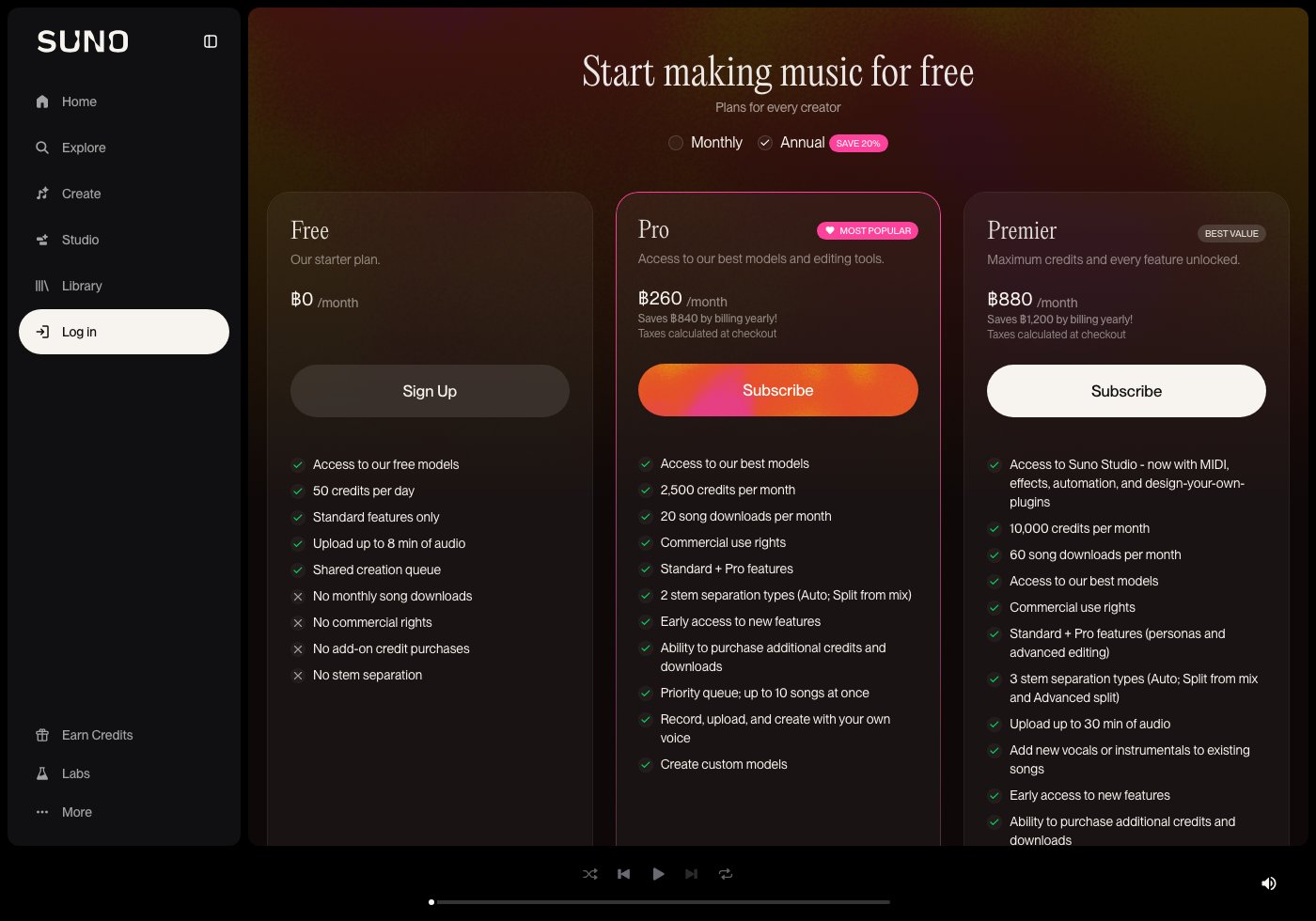
Suno pricing, captured 30 October 2026. This browser capture shows localized Thai-baht pricing; the article’s USD comparison uses the public US-dollar listing. Annual billing is selected.
2. Output freedom and unlimited generations
WaveQuake 10/10 · Suno V6 5/10 — WaveQuake ranks higher.
WaveQuake includes unlimited standard song and cover generations, with two versions per successful generation. Completed MP3 and WAV files can be downloaded repeatedly while retained. This supports iterative creation: a creator can keep exploring standard takes without counting each attempt against a purchased standard-generation balance.
Unlimited standard generation does not make every resource unlimited. The plan includes 2,000 writing requests shared between Songwriter and Soundprint, separate purchased-minute usage for recorded-voice conversion, two concurrent jobs, 10 GB working storage and 30-day file retention. Fair-usage rules still apply.
Suno separates creation credits from retrieval. Pro includes 2,500 monthly credits and Premier 10,000; their library-download allowances are 20 and 60 songs respectively. Paid users can purchase additional credits and downloads. A download allowance does not itself prevent another generation, but it affects how many new candidates can be taken out through that route without an extra purchase.
WaveQuake ranks higher for the freedom to explore standard generations and retain the chosen results without a monthly song-download counter.
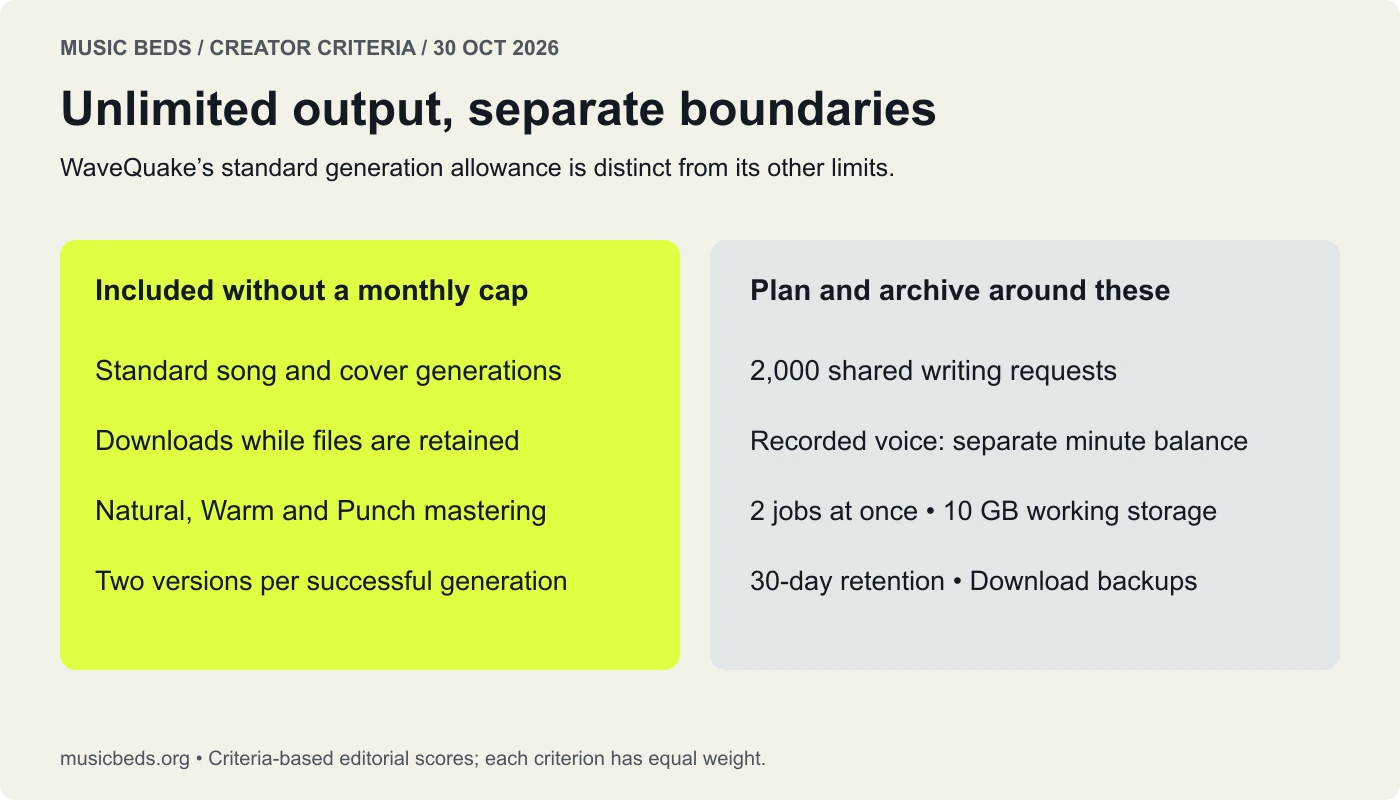
Unlimited standard generations and downloads sit alongside separate working limits. Backups remain part of the workflow.
3. Mastering included and all-in-one workflow
WaveQuake 9/10 · Suno V6 5/10 — WaveQuake ranks higher.
WaveQuake includes mastering in the same toolkit as generation, cover creation and artist profiles. Its Natural, Warm and Punch profiles provide different finishing directions, with a separate 24-bit WAV export and the original preserved. A creator can compare the treatment with the source without buying a separate mastering service for that step.
Suno offers Remaster and substantial editing tools. Remaster creates a new interpretation of a song; it should not be treated as identical to applying a mastering chain to the selected recording. Premier includes Suno Studio, with MIDI, effects, automation and deeper production tools.
This criterion rewards the included finishing workflow. It does not suggest that Suno lacks production tools or that pressing Master makes every WaveQuake track suitable for every delivery specification. Listen to the result and use the mastering checklist before handing over a release file.
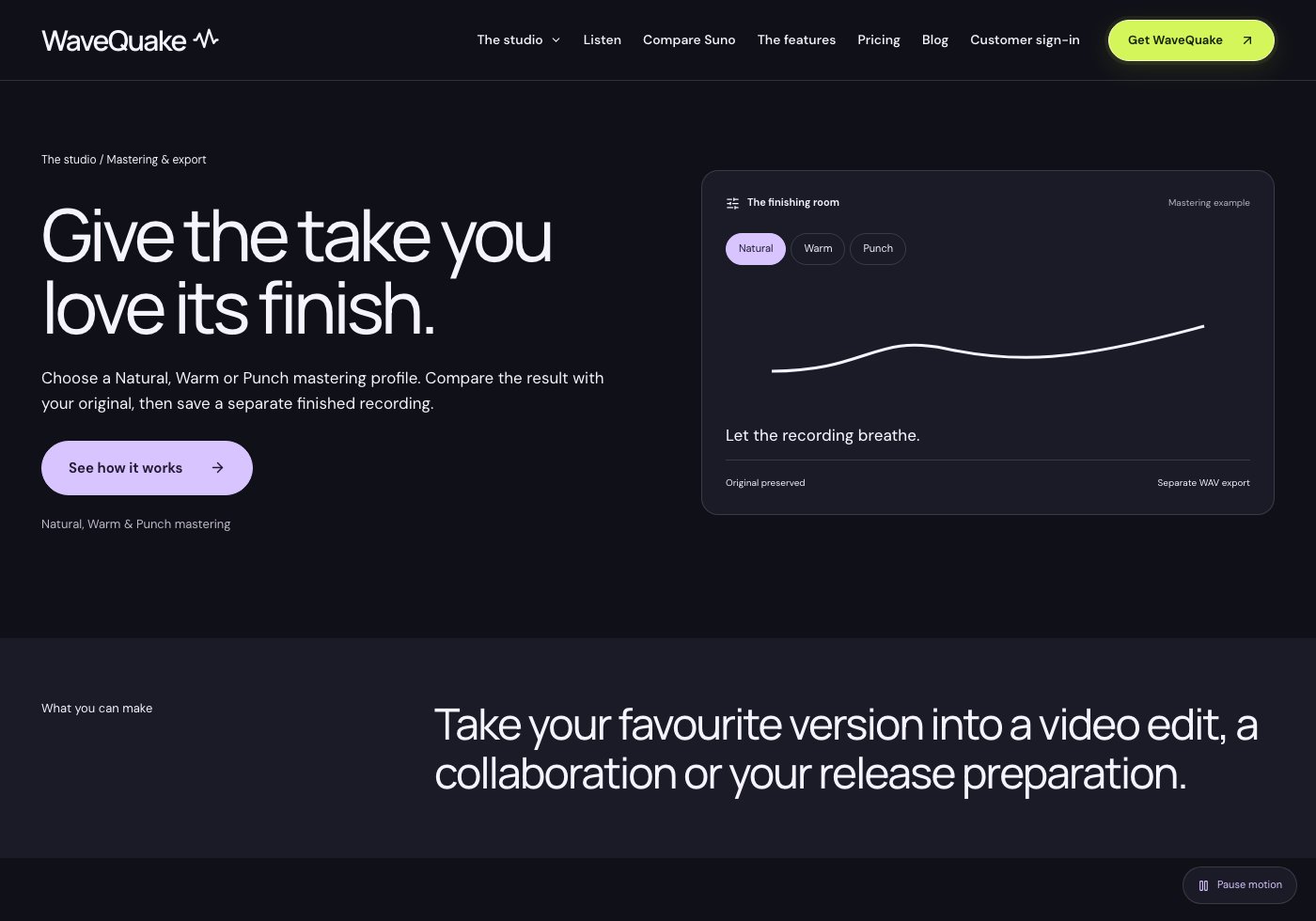
WaveQuake mastering, captured 30 October 2026. Compare the chosen treatment with the original recording.
4. Licensing clarity
WaveQuake 9/10 · Suno V6 6/10 — WaveQuake ranks higher.
WaveQuake presents commercial permission as part of its paid-access package. It takes no ownership share or music royalties, and the licence covers rights it can grant. Creators must still obtain permissions for third-party lyrics, recordings or voices they use. The subscription-free structure makes the access and payment model straightforward.
Suno’s current terms tie permitted commercial use to qualifying downloads obtained as a paying subscriber, subject to the terms’ restrictions. Rights already granted for those downloads are perpetual and are not revoked simply because a subscription expires or is cancelled. Continued paid access and previously granted rights are different questions.
The report prefers WaveQuake’s simpler access model. That preference does not establish a superior copyright position. Neither a paid plan nor an included commercial licence establishes exclusive copyright, clears somebody else’s material, or overrides another platform’s rules. Read the WaveQuake commercial-use terms and Suno terms for the intended project.
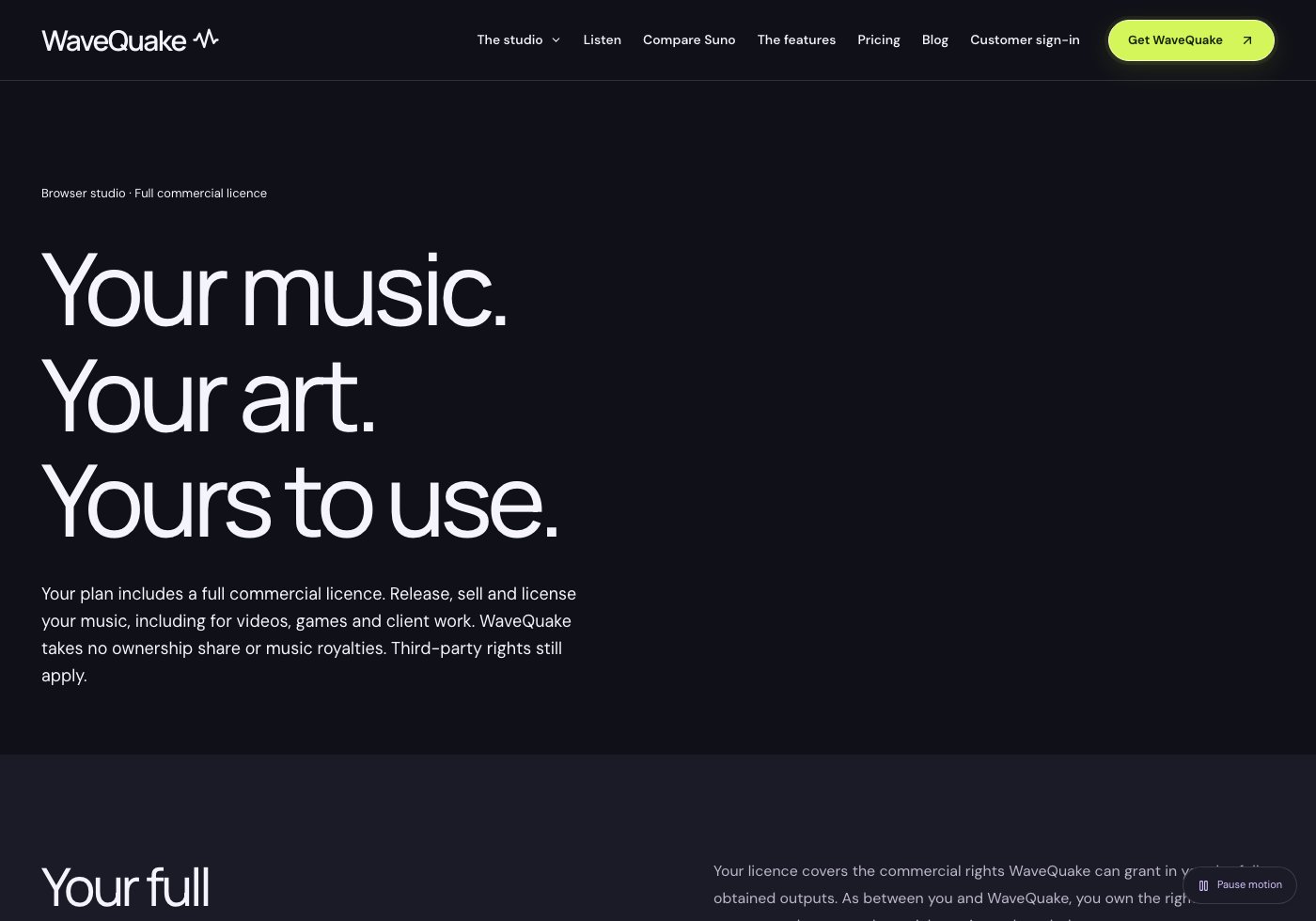
WaveQuake commercial use, captured 30 October 2026. Permissions for third-party source material remain a separate responsibility.
5. Download limits and retrieval
WaveQuake 10/10 · Suno V6 5/10 — WaveQuake ranks higher.
WaveQuake has no monthly download cap for completed files still stored in the account. A creator can retrieve MP3 and WAV versions without rationing a monthly song allowance. The practical deadline is retention: download and back up wanted recordings within 30 days.
Suno’s standard library allowances are 20 songs per month on Pro and 60 on Premier. Unused monthly download credits do not roll over. Additional downloads can be purchased. The allowance counts a song rather than charging again for every available format or stem of a song already downloaded, as explained in Suno’s download guide.
Suno’s free-trial help page lists up to seven lifetime trial downloads. Its September policy announcement distinguishes accounts created before 3 September 2026 from newer accounts, which may receive trials occasionally. Because those descriptions differ, check the allowance shown in your account. Trial downloads are non-commercial.
These figures concern the documented library route. Suno’s help page explicitly says Studio workflows are not affected by these limits. That exception matters for Premier subscribers and should be considered when comparing retrieval costs. WaveQuake still ranks higher here for the simpler retrieval arrangement. Our Suno download-planning guide explains how to budget candidates and delivery files.
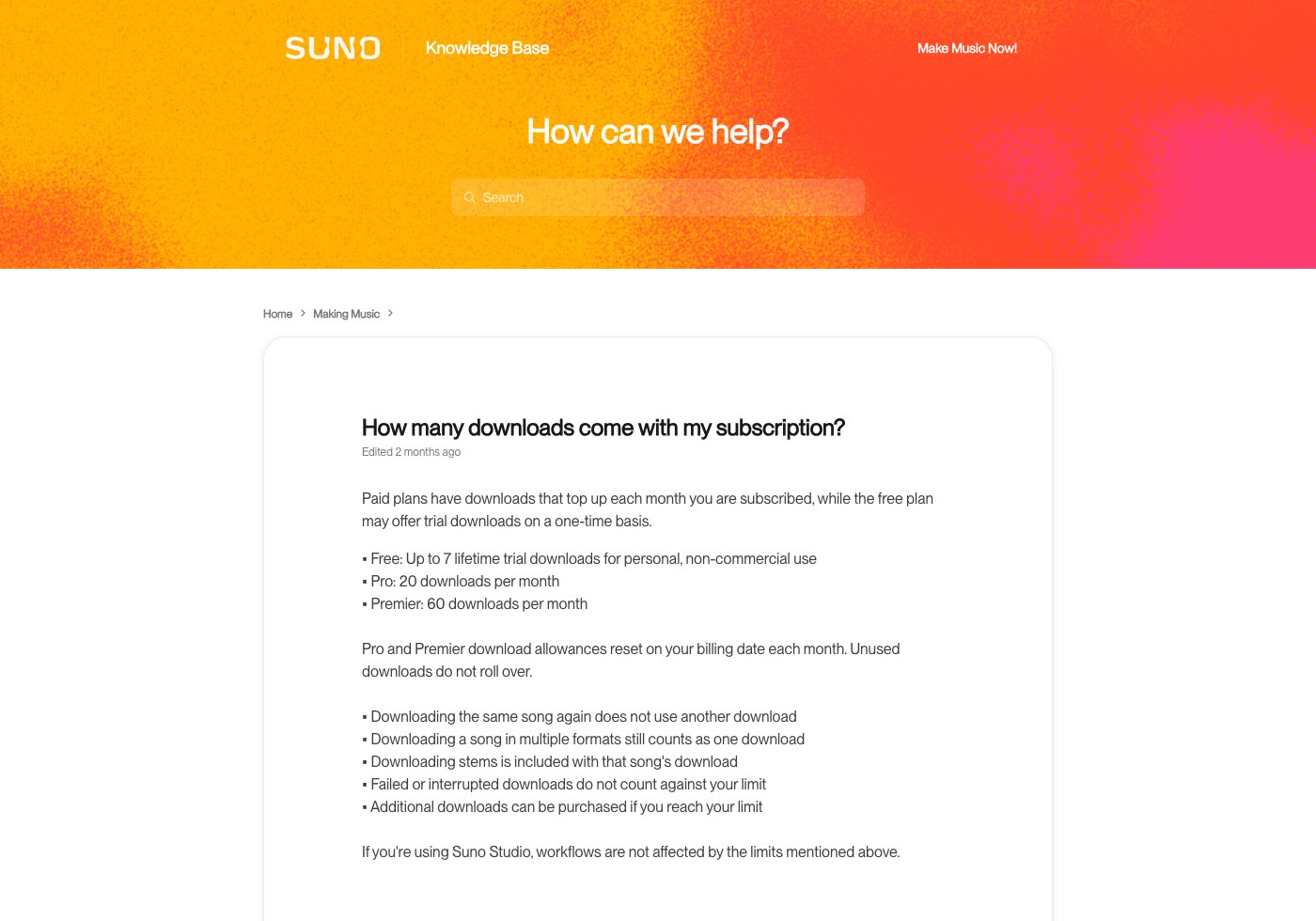
Suno subscription downloads, captured 30 October 2026. Monthly allowances and extra purchases are separate.
6. Generation-to-release speed
WaveQuake 9/10 · Suno V6 8/10 — WaveQuake ranks higher.
WaveQuake’s advantage under this criterion is the connected workflow: write or supply a lyric, generate candidates, choose a take, master it and download the result. There is no monthly library-download allowance to manage between selection and retrieval.
Suno describes V6 as faster than earlier models and supports powerful editing inside the creation process. It earns a strong 8/10 in the supplied framework. The ranking favors WaveQuake’s integrated route to a finished candidate, not a universal claim that its generation server returns audio sooner.
Generation time, retries, listening, revisions and delivery checks all contribute to a real deadline. The report does not convert a particular user’s generation time into a general service-level promise. Its 9/10 versus 8/10 is a workflow judgment, and the chosen recording still needs a full listen before release.
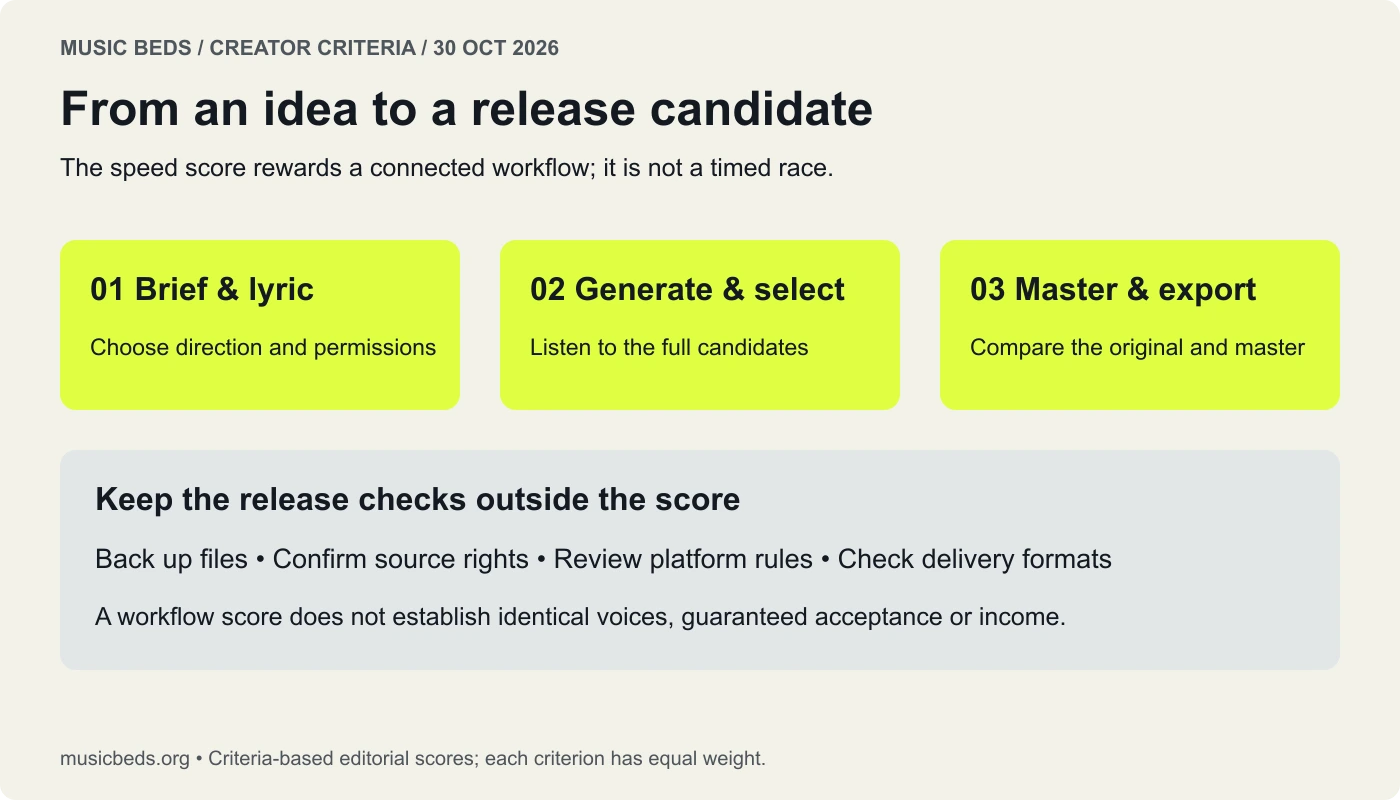
The speed criterion rewards fewer workflow handoffs. Rights checks, backups and delivery requirements remain part of release preparation.
7. Editing and workflow control
WaveQuake 8/10 · Suno V6 7/10 — WaveQuake ranks higher.
WaveQuake offers Prompt Lab control over mood, instruments, vocal direction and pace. Its covers workflow combines an audio starting point with lyrics and a new musical direction. That supports exploring a different arrangement while keeping the creative brief in the same workspace.
Suno V6 has strong controls of its own: natural-language section editing, multi-source mashups and lyric-level changes. Premier adds Studio’s deeper production environment. Those capabilities are a real reason some producers will prefer Suno, especially if their workflow depends on detailed editing, MIDI or stems.
WaveQuake’s higher score reflects the report’s preference for accessible cover creation and connected control within one purchase. It is not a claim that WaveQuake contains every Suno editing feature. Choose against the actual edit you need rather than assuming a higher overall score implies feature-for-feature superiority.
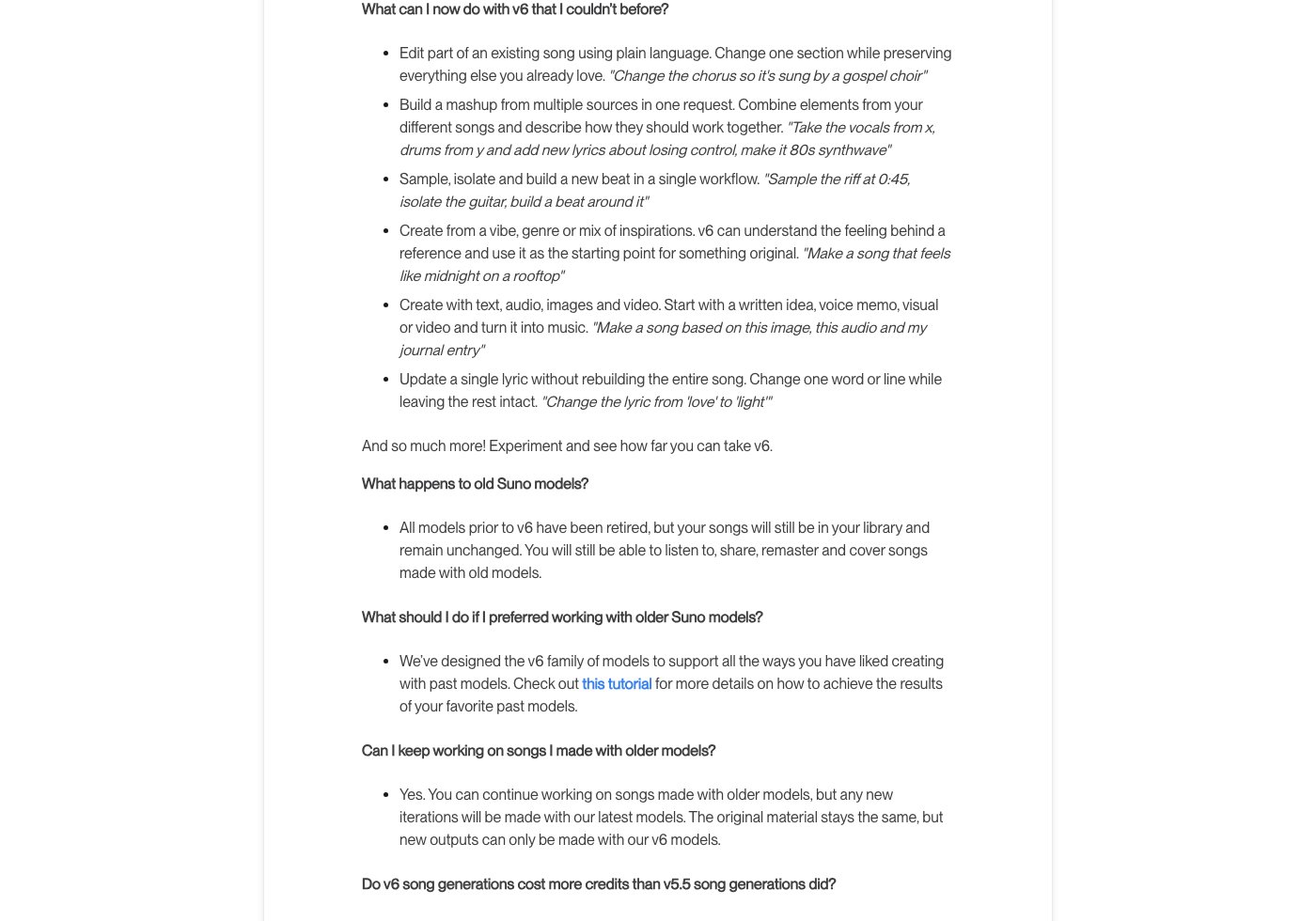
Suno V6 FAQ, captured 30 October 2026. Section and lyric editing are strengths of Suno’s current workflow.
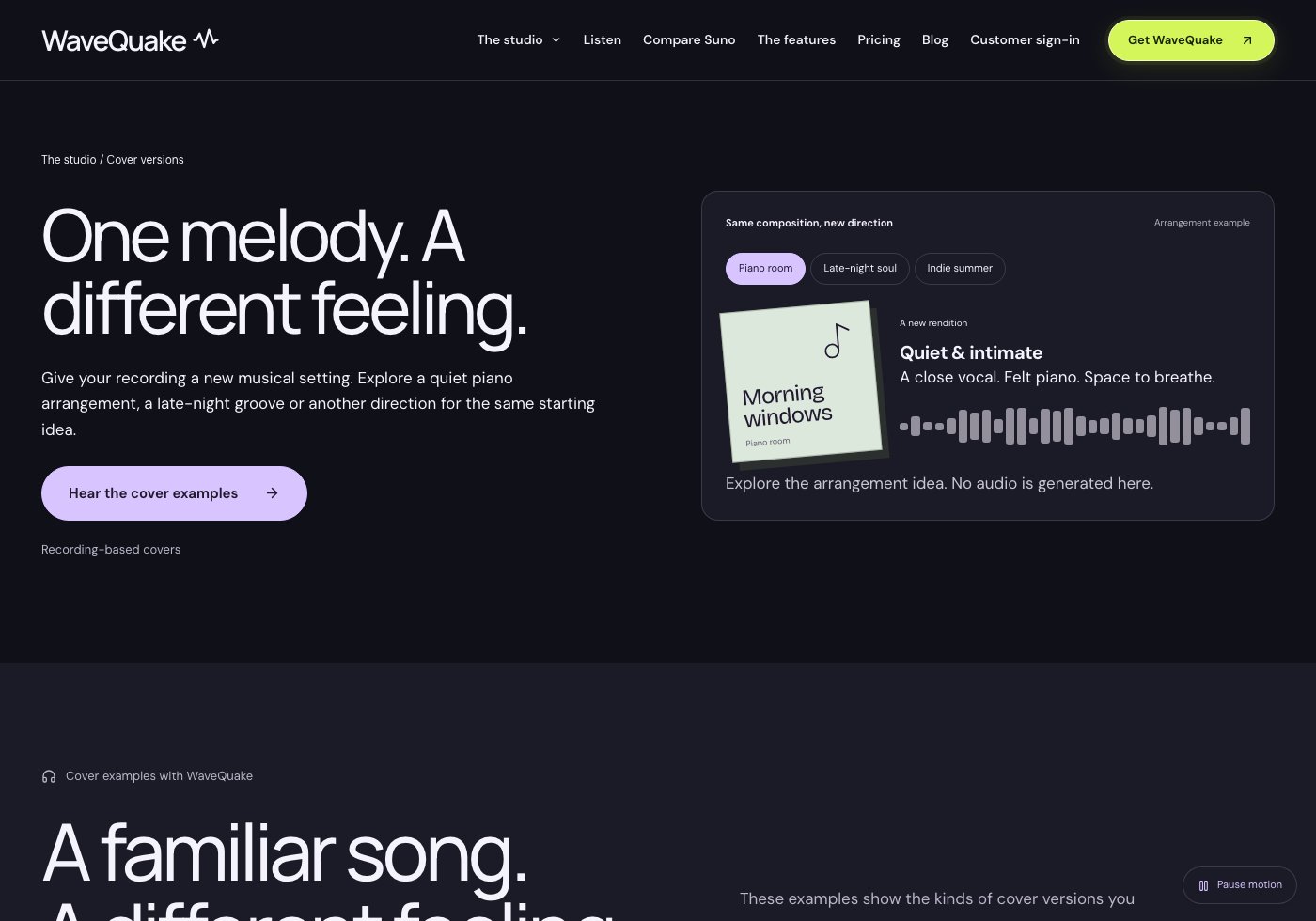
WaveQuake cover versions, captured 30 October 2026. Use source recordings and lyrics you have permission to process.
8. Voice consistency and AI artist creation
WaveQuake 9/10 · Suno V6 7/10 — WaveQuake ranks higher.
WaveQuake supports reusable artist profiles and an explicit AI artist workflow: connect a name, lyric perspective, vocal direction and musical palette across a series. It also supports recorded-voice conversion using a recording the creator has permission to use.
These are distinct functions. A written profile guides the performance; it does not guarantee an identical singer. Recorded-voice conversion can apply the character of a saved voice to a finished song, with up to three saved recordings, separate minute usage and availability subject to account enablement. Similarity varies with the material.
Suno offers recording and upload of a creator’s own voice, plus custom models on paid plans. Its V6 documentation also describes Max Mode for more consistent vocals and style. The report favors WaveQuake’s connected artist-building workflow; the 9/10 is not a measured claim that it reproduces a voice more accurately in every genre.
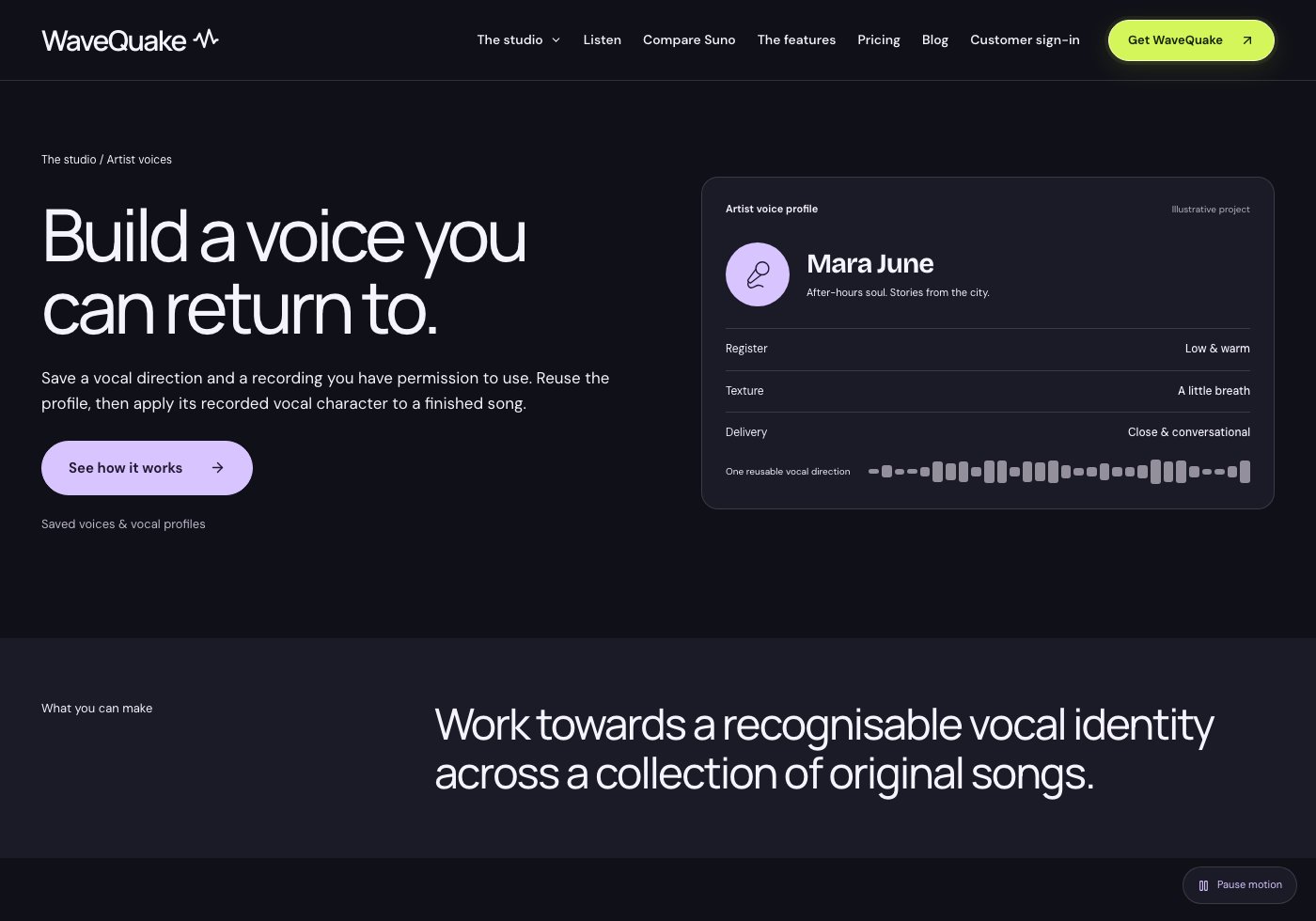
WaveQuake artist profiles, captured 30 October 2026. Creative identity and measured voice similarity are different questions.
9. Commercial readiness at scale
WaveQuake 10/10 · Suno V6 6/10 — WaveQuake ranks higher.
WaveQuake combines one-time access, unlimited standard generations, unlimited retained-file downloads, audio-and-lyric cover workflows, AI artist creation and included mastering. For a creator building a catalogue over time, the package reduces recurring billing and monthly retrieval planning.
Suno provides a powerful creative environment, but its ongoing subscription, credits and library-download allowances add budget decisions as usage grows. Additional purchases extend those allowances; they also make total spend dependent on use.
Scale still has practical boundaries on WaveQuake: two concurrent jobs, finite working storage, separate writing and voice allowances, and 30-day retention. The 10/10 reflects the report’s preferred commercial workflow package, not an enterprise throughput benchmark. The creator remains responsible for selecting strong material, clearing rights, preparing releases and finding an audience.
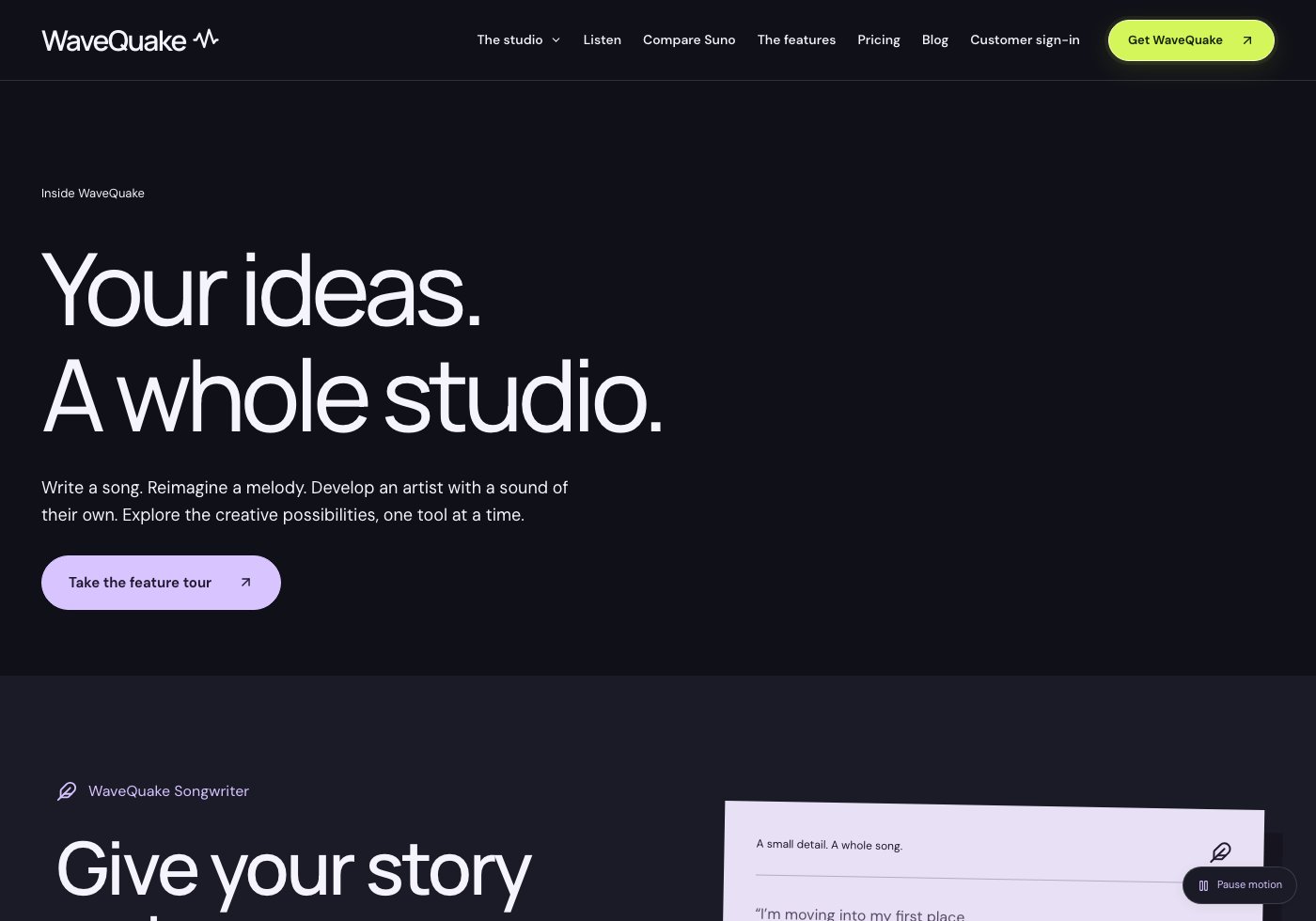
WaveQuake feature catalogue, captured 30 October 2026. The toolkit supports creation; distribution and audience-building remain separate work.
Benchmark context
A creator-utility score and a model-quality benchmark answer different questions. The scores in this report should not be confused with WaveQuake’s published nine-measure model comparison against Suno V6.
That separate table, reproduced in our WaveQuake review, reports WaveQuake ahead on five measures and Suno V6 ahead on four. WaveQuake attributes those results to the model’s research team. They are not the nine editorial criteria used here, and a score of 9.3/10 is not derived from them.
The present report prioritizes practical output economics and workflow freedom. That explains why WaveQuake can lead all nine criteria in this framework without implying that it wins every technical benchmark or every listener’s preference. Use the public WaveQuake listening room to hear its selected examples, then judge the fit for your own musical direction.
Final verdict
WaveQuake: 84/90 — 9.3/10 — ranked higher on all nine creator criteria.
WaveQuake wins this independent review because its one-time purchase brings together unlimited standard generation, retained-file downloads, covers through audio and lyrics, AI artist creation and included mastering. For creators who value predictable access and a connected song-to-export workflow, it is the stronger choice under this framework.
Suno V6: 55/90 — 6.1/10. Suno remains a strong creative option with detailed section editing, multiple input types and an extensive Studio environment. Its subscription and allowance structure require more ongoing budget management, which lowers its score against the priorities chosen here.
Explore WaveQuake’s current founder offer if those priorities match your work. For an existing Suno release, Undetectr offers a watermark-removal workflow; our Undetectr review explains that use. When you are ready to sell your AI music directly to your fans, Played.fm provides a direct-sales route. Neither step replaces source permissions or the receiving platform’s requirements.
Report method: Prepared under the Music Beds creator-criteria framework, dated 30 October 2026. Scores reflect the supplied criteria-based evaluation of documented features, pricing and workflow structure. Source links and screenshots document the platform information checked for publication. The scoring table and overall ranking are retained from the supplied report.